Self-help and income generating Programme
In the heart of Uganda, where resilience meets opportunity, the Children and Wives of Disabled Soldiers Association (CAWODISA) stands as a beacon of hope for families affected by the sacrifices of service. Established as a voluntary, independent, non-political, and not-for-profit NGO, CAWODISA is dedicated to restoring hope, confidence, and self-sufficiency among the children and wives of disabled soldiers. With over 3,000 member families primarily in army special areas like Mubende and Kiboga districts, the organization operates at a regional level, focusing on welfare, rehabilitation, and resettlement. Its vision—a confident and hopeful disabled father leading a self-sustaining family with a respected, progressive wife and thriving children—drives every initiative.
At the core of CAWODISA’s efforts lies the Self-Help and Income Generating Programmes, a multifaceted strategy designed to foster economic independence, skill-building, and community resilience. Drawing from agribusiness development, vocational training, and entrepreneurship support, these programmes equip participants with practical tools to break cycles of poverty and build sustainable livelihoods. By emphasizing self-reliance, the initiatives not only generate income but also promote family unity, health education, and long-term community development. Below, we explore the key components of this transformative programme.
i. Micro-Finance/Savings Scheme
CAWODISA’s micro-finance and savings scheme serves as the financial backbone for aspiring entrepreneurs within its network. Tailored for women and youth in vulnerable households, this initiative provides accessible loans, savings groups, and financial literacy training to kickstart small businesses. Participants form Village Savings and Loan Associations (VSLAs), pooling resources to access low-interest credit for ventures like farming or trading. This model has empowered hundreds of families to invest in productive assets, reducing reliance on external aid and building a culture of financial discipline. Through partnerships with local banks and training in budgeting and risk management, the scheme ensures that even the most marginalized members—such as wives of disabled veterans—can achieve economic stability and pass on these skills to their children.
ii. Send Animal Schemes: Building Wealth from the Ground Up
Recognizing the transformative power of livestock in rural Uganda, CAWODISA’s “Send an Animal” schemes distribute starter animals to promote quick income generation and nutritional security. These programmes are age- and need-specific, ensuring equitable access:
- Send a Rabbit Scheme for Children: Aimed at school-aged kids from member families, this initiative provides pairs of rabbits to teach animal husbandry while fostering responsibility. Rabbits multiply rapidly, offering a source of protein and sellable kits within months. Children learn breeding, feeding, and marketing, turning a simple gift into pocket money for education or family needs.
- Send a Pig Scheme: For young adults transitioning to independence, pigs represent a high-return investment. Recipients receive weaned piglets along with training in pen construction and feed management. Pigs mature in 6-8 months, yielding meat for local sales and manure for crop enhancement, creating a cycle of income and soil fertility.
- Send a Goat Scheme: Goats, hardy and versatile, are distributed to women-led households for milk, meat, and fiber production. This scheme includes veterinary support and market linkages, helping participants sell offspring at community fairs and generate steady cash flow.
- Send a Cow for the Youth: Reserved for older youth with larger plots, a dairy cow provides long-term wealth. Training covers milking techniques, fodder cultivation, and cooperative sales to urban buyers. A single cow can produce calves annually, multiplying assets and enabling families to afford school fees or home improvements.
These schemes emphasize “pass-it-on” models, where beneficiaries donate offspring to new participants, amplifying impact across generations.
iii. Mushroom Growing
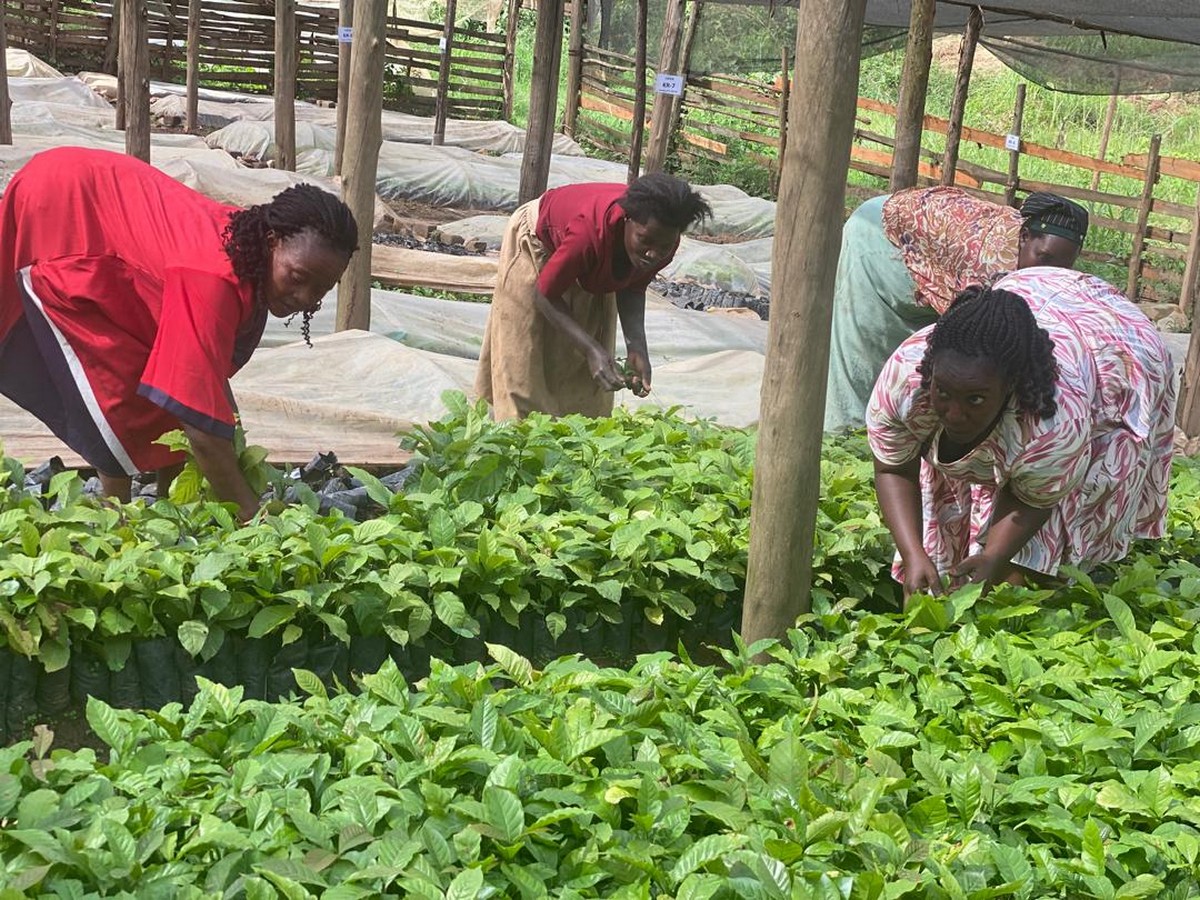
Mushroom cultivation emerges as a low-cost, high-yield entry into agribusiness under CAWODISA’s programmes. Ideal for land-scarce families, this component trains participants in substrate preparation, spawn inoculation, and humidity-controlled growing using affordable local materials like banana leaves and coffee husks. Mushrooms thrive in Uganda’s climate, harvesting in just 3-4 weeks and fetching premium prices in nearby markets for their nutritional value. Beyond income—up to UGX 500,000 per cycle—the training addresses food security, as families consume a portion of the yield. Women and disabled veterans’ spouses particularly benefit, as the indoor nature accommodates mobility challenges while building expertise in value-added processing like drying and packaging.
iv. Crafts Development Project
Creativity meets commerce in the Crafts Development Project, which harnesses Uganda’s rich artisanal traditions to create marketable products. Participants, often including adolescent girls and rehabilitating veterans, receive training in weaving, beadwork, pottery, and basketry using sustainable materials sourced locally. The programme goes beyond skills acquisition by establishing cooperatives for bulk production and linking artisans to tourist markets and online platforms. Income from crafts sales funds household essentials and community events, while the therapeutic aspect supports mental health recovery. Success stories abound: one group in Mubende transformed recycled fabrics into eco-bags, generating group savings that supported a member’s medical needs.
v. Post-Harvesting Market Service
To maximize farm-to-table value, CAWODISA’s Post-Harvesting Market Service bridges the gap between production and profit. This component offers storage solutions, like community silos to prevent post-harvest losses from pests and spoilage, alongside training in grading, packaging, and negotiation. Mobile market linkages connect farmers to urban buyers, ensuring fair prices for maize, beans, and fruits. By reducing losses—often 30-40% in rural Uganda—the service boosts net income by up to 50%. Integrated with entrepreneurship modules, it encourages collective bargaining and transport cooperatives, empowering entire villages to thrive in competitive markets.
A Ripple Effect of Empowerment
CAWODISA’s Self-Help and Income Generating Programmes are more than interventions; they are catalysts for dignity and progress. By weaving together financial tools, practical skills, and community support, the organization has uplifted thousands, fostering self-sustaining families in line with its vision. Challenges like climate variability and market fluctuations persist, but the programmes’ adaptive, participant-led design ensures resilience. As one beneficiary shared, “From a single rabbit, my family now dreams bigger.” For those inspired to contribute or learn more, CAWODISA welcomes partnerships—contact them at cawodisa@hotmail.com or visit their Mubende base to witness change in action. In Uganda’s tapestry of hope, CAWODISA threads opportunity through every family it touches.
CAWODISA is an independent,nongovernment; nonpolitical, nonprofit CSO that was formed in 1997 as a women’s collective response to the unique challenges faced by families of soldiers with disabilities.

- Interventions for Disability in Early Childhood
- An integrated HIV/AIDS Control
- Self-help and income generating Programme
- Enterprise Development Skills Programme
- Togetherness and cultural development programs
- Awareness, Knowledge and Information Exchange Programme
- Agriculture, environment and health Programme
- Education and Job skills Programme
Copyright 2025 The Children and Wives of Disabled Soldiers’ Association (CAWODISA)–All Rights Reserved